

Artificial Intelligence (AI) is no longer a technology reserved for researchers, software engineers, or computer science graduates. Today, AI is transforming healthcare, agriculture, finance, education, marketing, and countless other industries;creating opportunities for people from every academic and professional background.
If you've ever thought, "I'm interested in AI, but I didn't study Computer Science," here's the good news:
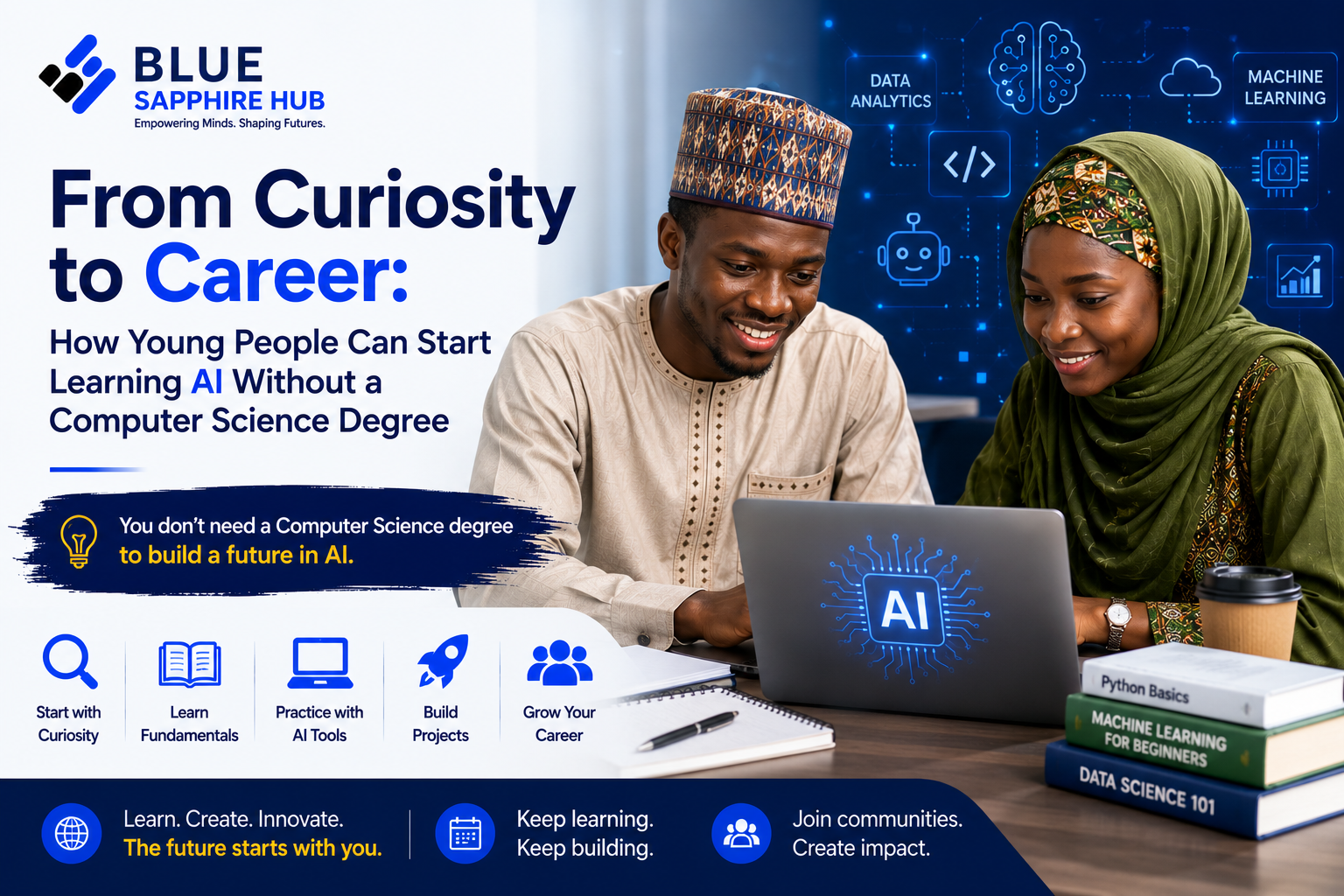
You don't need a Computer Science degree to build a successful career in AI.
What you need is curiosity, consistency, and a willingness to keep learning.
At Blue Sapphire Hub Foundation, we believe that technology should be accessible to everyone. Whether you're a student, graduate, entrepreneur, teacher, designer, or career changer, there has never been a better time to begin your AI journey.
Why AI Skills Matter Today:
Artificial Intelligence is reshaping how we work and solve problems. Businesses are using AI to automate repetitive tasks, analyze data, improve customer experiences, and develop smarter products.
As AI adoption grows, employers are increasingly looking for professionals who understand how to use AI tools—not just those who can build them from scratch.
This means opportunities are emerging for people with diverse backgrounds, including those in business, healthcare, education, agriculture, media, and the creative industries.
The future belongs to individuals who know how to work alongside AI.
You Don't Need to Be a Programmer:
One of the biggest misconceptions about AI is that everyone must become a software engineer.
In reality, the AI ecosystem includes many different roles, such as:
- AI Product Managers
- Prompt Engineers
- Data Analysts
- UX Designers
- AI Content Strategists
- Digital Marketers
- Researchers
- Educators
- Business Analysts
- Community Managers
Many of these roles require strong communication, creativity, critical thinking, and problem-solving skills alongside a basic understanding of AI.
Start with the Fundamentals
Before diving into complex algorithms, focus on understanding what AI is and how it works.
Learn concepts such as:
- Machine Learning
- Generative AI
- Large Language Models (LLMs)
- Prompt Engineering
- Data and AI Ethics
- Responsible AI
Learn Through Free Online Platforms:
One of the greatest advantages of learning AI today is the abundance of high-quality free resources.
Some excellent places to begin include:
- Google AI Essentials
- Microsoft Learn
- IBM SkillsBuild
- Coursera (free audit option)
- Kaggle Learn
- DeepLearning: AI Short Courses
- freeCodeCamp
- Harvard's CS50 AI resources
- YouTube channels focused on AI and machine learning
Choose one platform and stay consistent instead of jumping between multiple courses.
Practice with AI Tools:
Learning becomes meaningful when you apply what you've studied.
Explore popular AI tools by:
- Writing better prompts
- Summarising research
- Creating presentations
- Analysing datasets
- Designing graphics
- Building simple chatbots
- Automating repetitive tasks
Hands-on practice helps you understand both the strengths and limitations of AI.
Build Projects, Not Just Certificates:
Certificates are valuable, but employers and collaborators also want to see what you've created.
Start building a portfolio by:
- Developing a simple AI-powered application
- Creating a chatbot for a local business
- Designing an AI-assisted marketing campaign
- Writing articles about your learning journey
- Solving community problems with AI tools
- Participating in hackathons and innovation challenges
Every project demonstrates initiative, creativity, and practical skills.
Join Learning Communities:
Learning is easier when you're surrounded by people who share your interests.
Become active in communities such as:
- Google Developer Groups (GDG)
- Google Developer Student Clubs (GDSC)
- Blue Sapphire Hub Foundation programmes
- AI meetups
- Innovation hubs
- Tech conferences
- Online communities on LinkedIn and Discord
Communities provide mentorship, accountability, networking opportunities, and exposure to real-world projects.
Develop Skills Beyond AI:
Technical knowledge alone is no longer enough.
Employers also value:
- Communication
- Collaboration
- Problem-solving
- Creativity
- Leadership
- Adaptability
- Critical thinking
- Emotional intelligence
These human skills make you more effective when working with AI technologies and diverse teams.
Stay Curious and Keep Learning:
Artificial Intelligence evolves quickly. New tools, research, and applications emerge every month.Rather than trying to learn everything at once, focus on continuous improvement.
Read articles, attend webinars, experiment with new tools, ask questions, and remain open to learning.
Curiosity is one of the most valuable skills in the AI era.
Your Journey Starts with One Step:
Every AI expert was once a beginner.The difference between those who succeed and those who never start is not intelligence;it's action.
Whether you're studying accounting, agriculture, education, medicine, law, business, or the arts, AI can become a valuable part of your career journey.
At Blue Sapphire Hub Foundation, we remain committed to creating opportunities that equip young people with future-ready digital skills, connect them with innovation ecosystems, and prepare them for careers in the rapidly evolving digital economy.
The future of AI is not limited to computer scientists. It belongs to curious learners, creative thinkers, and courageous problem-solvers willing to take the first step today.
Continue Your Learning Journey with Blue Sapphire Hub
Follow Blue Sapphire Hub Foundation for updates on AI workshops, digital skills programmes, innovation challenges, mentorship opportunities, and community events designed to help young Africans thrive in the digital economy.